

Planting a hedge adds a new dimension to gardens, creating privacy, shelter for wildlife, year round greenery and filtering strong winds. Never again will you have to fork out to replace costly fence panels after a storm, or spend days slapping wood preservative on timber.
Hedging is invaluable for dividing up garden areas, whether it’s screening a veg plot or disguising an ugly bin store or composting area.
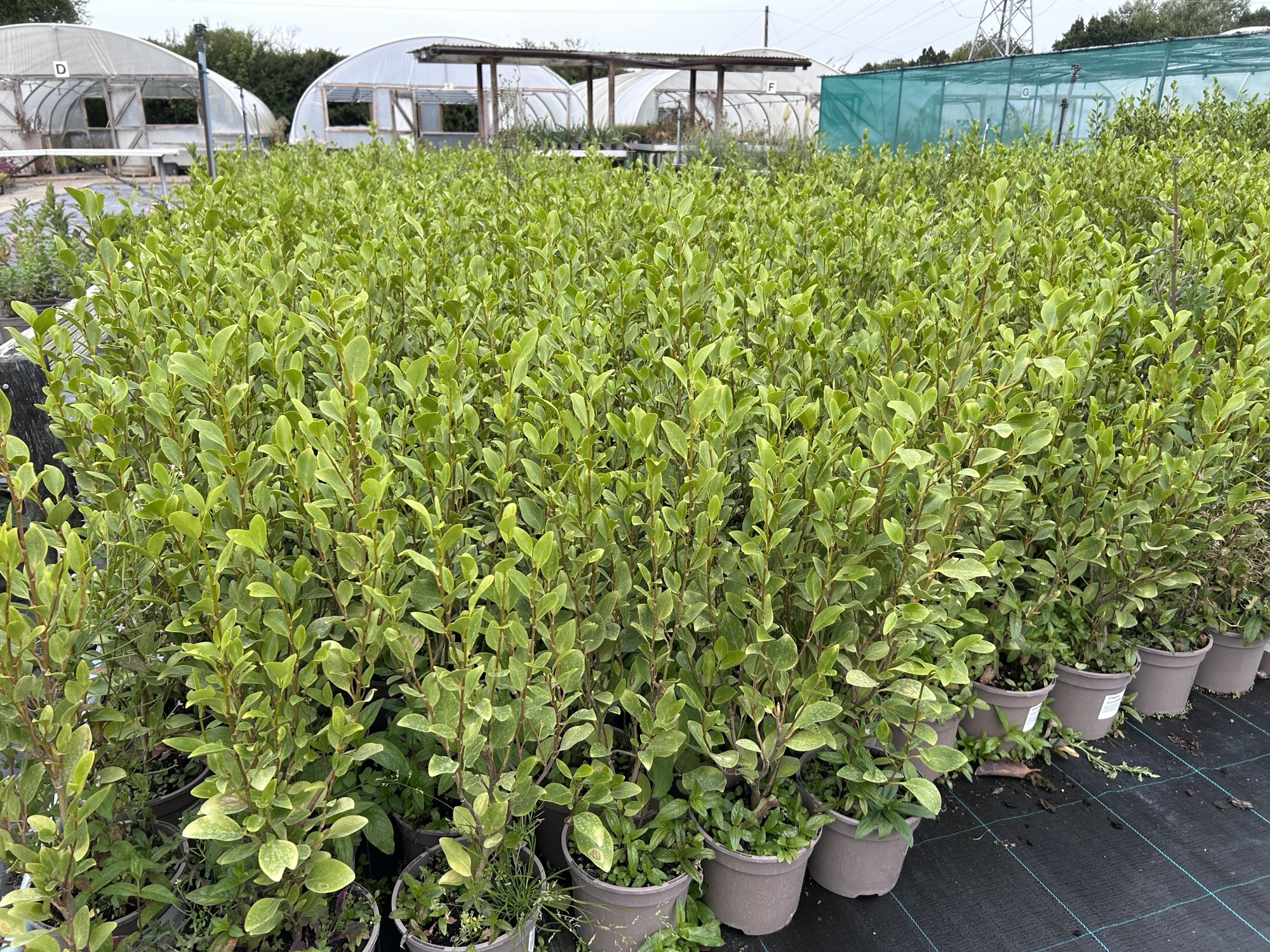
With its waxy, apple-green foliage, Griselinia littoralis – the New Zealand Broadleaf – is a top performer in Dorset’s coastal environment. Our home-grown griselinia hedging plants, available all year-round at Cherry Tree and Chestnut Nursery, are exceptional value for money.
Here, we look at how to plant and establish a thriving, low-maintenance hedge that’ll deliver many years of enjoyment and privacy.
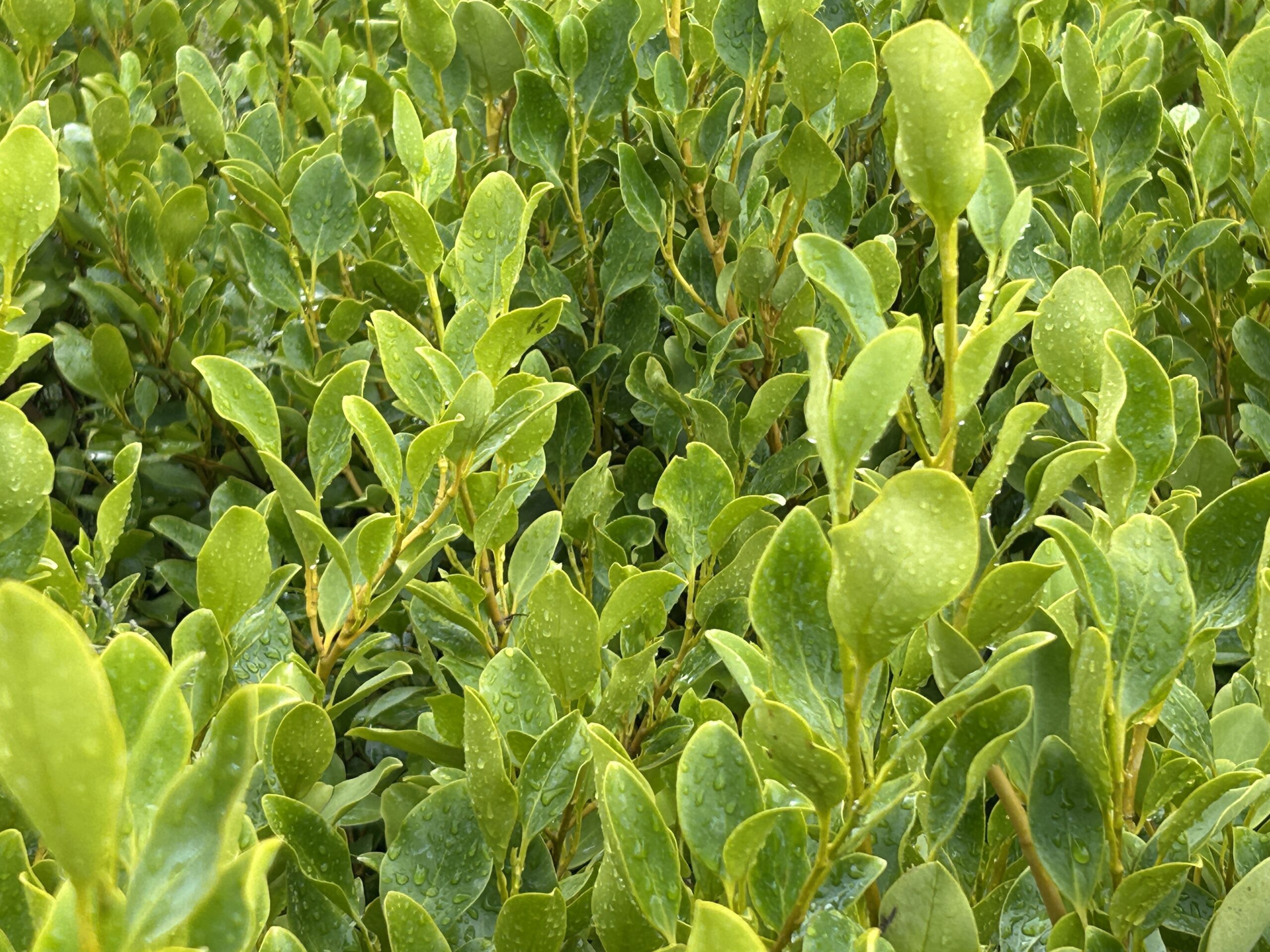
1 What’s special about griselinia?
Griselinia littoralis holds a Royal Horticultural Society Award of Garden Merit (AGM), the hallmark of exceptional garden performance.
Robust and evergreen, its dense, oval, light-green foliage is attractive all year-round, creating a safe environment for hedgehogs, insects and birds. The New Zealand Broadleaf thrives in coastal environments and is hardy to around -10C, so it’s perfect for Dorset.
It’s fast-growing, easily maintained and quickly forms a dense, neat hedge. Once established, griselinia is drought-tolerant, but plants must be kept well-watered during their first year.
2 Where can I grow griselinia?
New Zealand Broadleaf isn’t fussy and will happily grow in loam, sand, clay or chalk – although it’s at its best in well-drained soil.
Similarly, it’ll perform in acid, neutral or alkaline soil. Griselinia thrives in sheltered or exposed situations (even salt-laden coastal environments) and relishes the opportunity to grow in full sun, making it ideal for south or west-facing gardens.
However, plants will tolerate a degree of dappled shade. It can also be grown in large containers or troughs: ideal for contemporary gardens, and for creating privacy on overlooked patios and decking.
3 How far apart should griselinia plants be spaced?
As a general rule, griselinia should be planted between 60-75cm (24-30in) apart. For low hedging, and in situations where a dense hedge is required, choose 60cm (24in) spacing.
If you want a taller hedge or you’re prepared to give it time to mature, spacing plants 75cm (30in) apart will give them plenty of room to establish and thicken-up over the seasons.
4 How to prune a griselinia hedge
Griselinia littoralis is a vigorous but easily manageable grower, putting on 30-50cm (12-20in) of new growth every year.
Left unchecked, plants can reach heights exceeding 6m (20ft) after a decade or more, but they’re a cinch to prune using basic hedge-trimming shears or an electric hedge trimmer.
Trimming is commonly carried out from mid to late-spring, but can also take place in late summer or early autumn. Ideally, aim to trim hedges at least once a year.
Always take great care to ensure that no birds are nesting inside a hedge before trimming.
A height of around 1m (3ft) is often regarded as optimum for a griselinia hedge, but every garden is different and the final height will depend on your need for privacy and screening.
5 When should griselinia be planted?
Container-grown griselinia can go into the ground at any time of the year, as long as soil is workable.
If a hedge is being created in spring or summer, plants will need regular watering to help them establish, especially in light soils.
Autumn planting is recommended, as it gives plants time to settle in and root ahead of the next growing season, which makes hedges more resilient to drought. Griselinia can be planted in winter, too, but only when conditions are favourable and never when soil is frozen or waterlogged.
Call in to Cherry Tree or Chestnut Nursery today to see their extensive range of griselinia, available in a number of size options.